
DEPARTMENT OF MEDICAL SURGICAL NURSING
Department Overview
Medical–Surgical Nursing focuses on the promotion, maintenance, and restoration of health in adult patients across various healthcare settings. It is a core nursing specialty that supports medical–surgical practice and plays a vital role in developing students’ clinical competence, critical thinking, and professional skills.
Vision
- To achieve excellence in Medical–Surgical Nursing education through scientific knowledge, advanced clinical skills, technical expertise, and innovative nursing practices, thereby contributing to quality patient care and professional growth.
Mission
- To strengthen teaching–learning processes in Medical–Surgical Nursing through a competency-based and globally relevant curriculum that prepares students to deliver comprehensive and patient-centered care.
- To empower students to apply evidence-based nursing practices, promote interdisciplinary collaboration, and develop leadership, managerial, and ethical competencies essential for professional nursing practice.
Objectives
The objectives of the Department of Medical–Surgical Nursing at BLDEAS College of Nursing, Jamkhandi are to:
- Provide comprehensive theoretical and practical knowledge in Medical–Surgical Nursing.
- Develop advanced clinical skills to deliver safe, effective, and holistic care to patients.
- Enhance critical thinking and clinical decision-making abilities in diverse healthcare settings.
- Promote research orientation and evidence-based nursing practices.
- Foster professional ethics, accountability, and compassionate nursing care.
- Prepare students for leadership, managerial, and organizational roles in healthcare.
- Equip students to work effectively within multidisciplinary healthcare teams.
- Enable students to meet current and emerging challenges in medical–surgical nursing practice.
- Promote lifelong learning and continuous professional development.
Laboratory Facilities
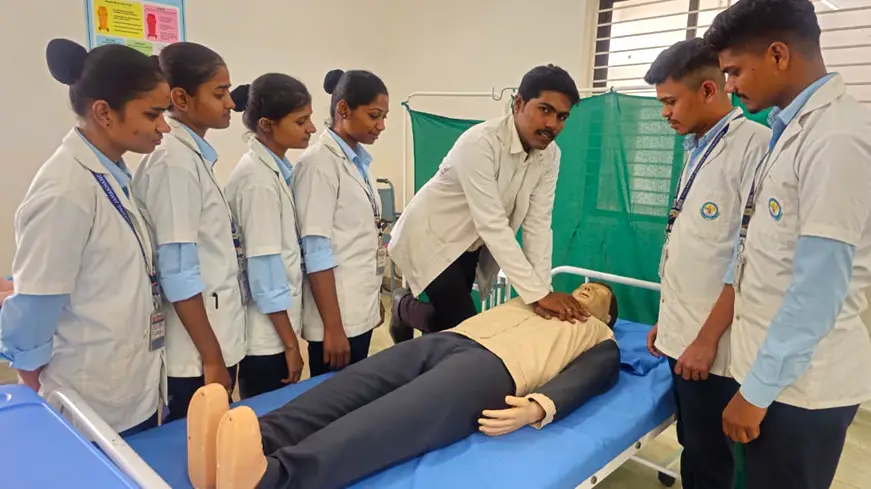
The Medical–Surgical Nursing Laboratory is well equipped with mannequins, simulators, and essential advanced equipment such as ECG machines, ventilators, and defibrillators. Students gain hands-on experience through demonstrations, simulations, workshops, and clinical presentations under the guidance of qualified and experienced faculty members.